Parallel High-Pressure Reactor Screening: Controls, Sampling and Reproducibility
2026-10-21 11:35:23Why four reactors can produce four different answers
Parallel experiments promise faster condition screening: several catalysts, temperatures or feed recipes can be tested in the same campaign. Yet a multi-position reactor does not, by itself, guarantee comparable experiments. A small discrepancy in actual liquid temperature, effective fill volume, gas charging sequence, agitation or sample timing can make an apparent formulation effect look larger than it is. This is particularly important for pressure reactions in which gas availability and the reaction environment change through the run.
At OLLITAL, we encourage researchers to treat parallel reactor screening as a measurement and experimental-design problem. The hardware should create controlled, documented comparisons, while the trial protocol defines what can legitimately be interpreted as a difference in chemistry. A convincing result starts with equivalent conditions, then asks whether the observed response is repeatable.
1 | Define the variable you intend to screen
Before arranging runs, specify the primary response: conversion, selectivity, yield, impurity profile, reaction time or another analytically defensible endpoint. Define one main factor to change deliberately, such as catalyst identity or temperature, and document the variables that should be held constant. These commonly include charge composition, solvent lot, initial gas composition, nominal fill fraction, stirring setup, pressure boundary, heating profile and sample-handling method.
When different variables must be tested together, use a defined experimental design rather than treating the four positions as four unrelated batches. Include a baseline or reference condition and repeat it on different stations over time. Randomizing the assignment of test conditions can help separate a real process effect from position-dependent bias. If all promising candidates occupy one side of the unit, the experiment has not ruled out a station effect.
Screening principle. Plan the comparison around one documented operating window and common analytical methods. Independent station control increases flexibility, but it also increases the number of differences the researcher must measure and explain.
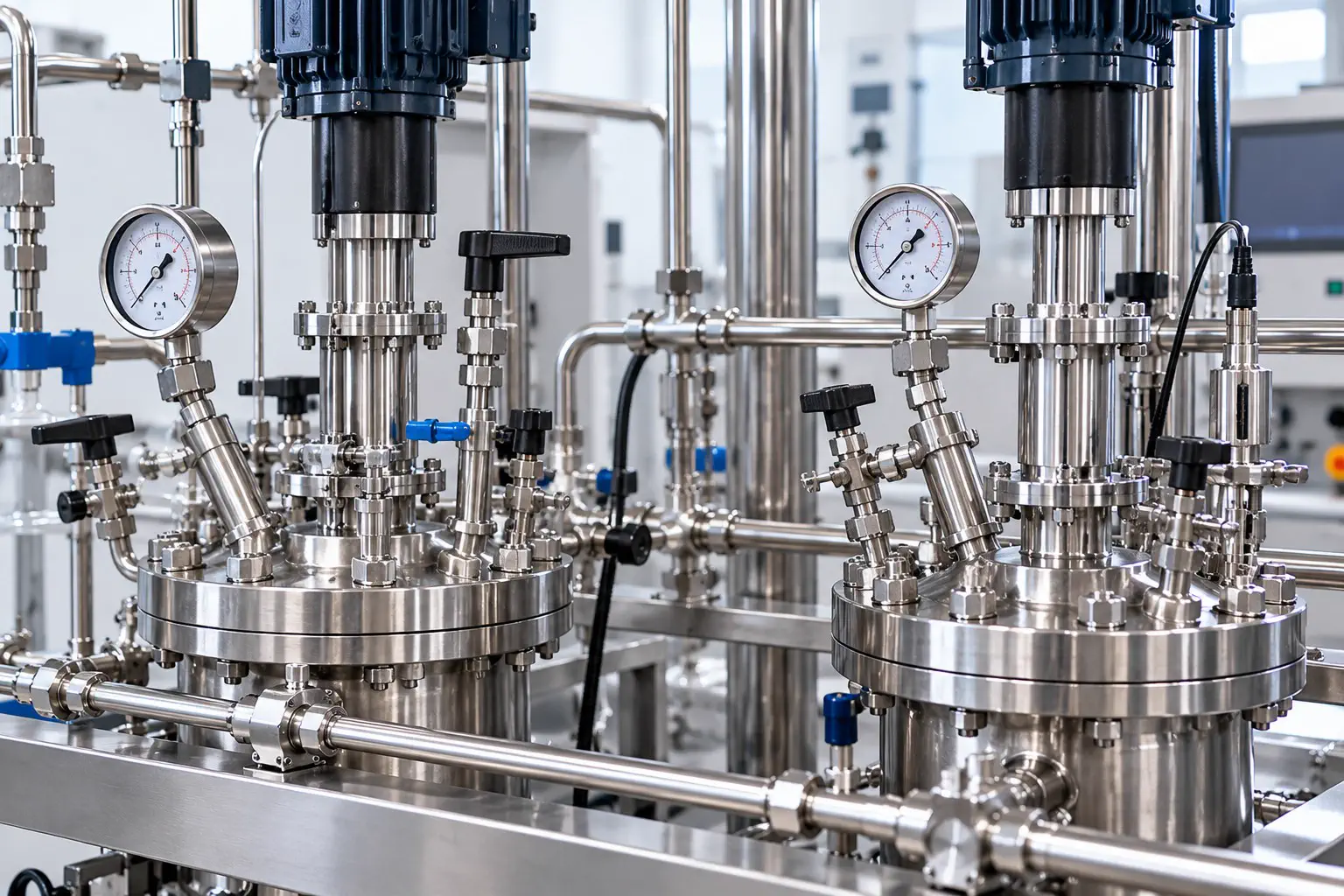
Figure 1 | Illustrative close-up of reactor heads, pressure gauges and fittings. Use recorded instrument histories and approved procedures to evaluate station comparability; displayed scales are not test data.
2 | Match the actual reaction environment, not only the displayed setpoints
An indicated heater temperature is not necessarily the same as the contents of a sealed vessel. Thermal contact, probe location, charge volume, fluid properties and exothermic or endothermic behavior can alter the rate at which each station approaches its target. Record the actual temperature trace and when the chosen reaction-time clock begins. For example, “60 minutes at temperature” should state whether the clock started when heating began, when a sensor reached the threshold, or after a defined stabilization period.
Similarly, the initial room-temperature gas charge is not the same quantity as pressure under hot reaction conditions. Heating, vapor pressure, gas dissolution and gas-consuming reactions can all change a pressure profile without indicating instrument failure. Do not compare catalytic performance only from an initial gauge reading. Where pressure history matters, capture the relevant temperature and pressure traces together and verify gauge ranges, calibration dates and data sampling intervals.
Matching vessel capacity is not sufficient if working volume and headspace differ. Confirm liquid volumes using a consistent weighing or metering method, record any solids or catalyst mass, and identify what occupies each line between gas supply and vessel. A nominally identical gas inlet arrangement may behave differently if restrictions, valve positions or dead volumes differ.
3 | Distinguish gas delivery from gas consumption
For gas-involving chemistry, the gas supply network is part of the experiment. Centralized gas distribution can simplify operation, but only when every station is isolated and controlled in the way the project requires. The capability to isolate positions, control pressure or introduce additional gas must be confirmed on the actual purchased configuration. It cannot be assumed from a general product-family page or a photograph of a different version.
Pressure decline may result from reaction, cooling, leak-related loss, gas dissolution or changing vapor pressure. It is not proof of conversion. Where gas uptake is a useful proxy, develop a validated material-balance method with suitable temperature and pressure compensation, appropriate leak checks and a separate analytical endpoint. Sampling or pressure adjustments performed on one station but not the others can also change the comparison.
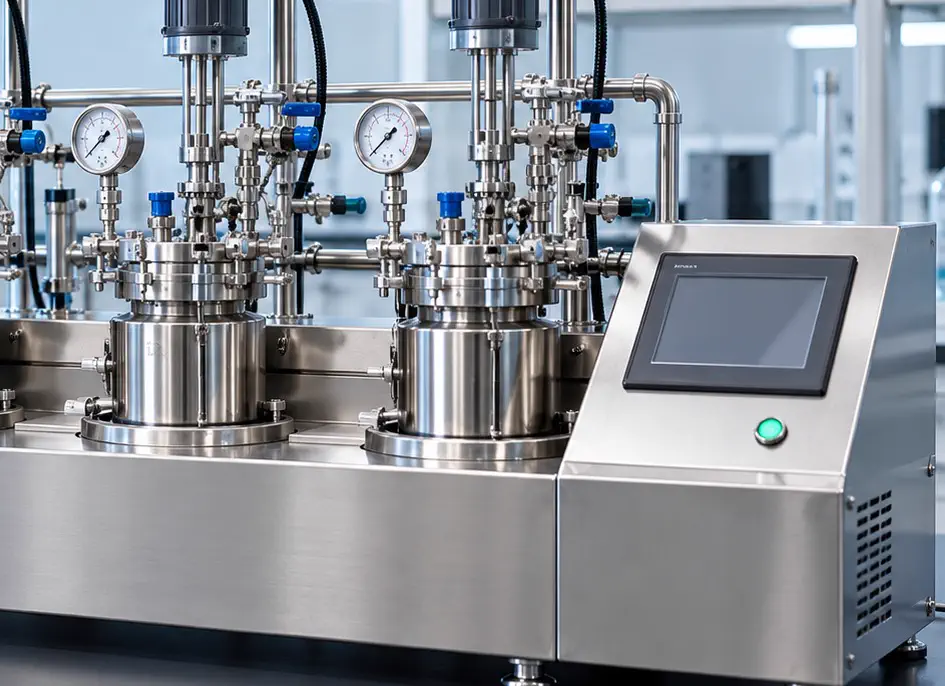
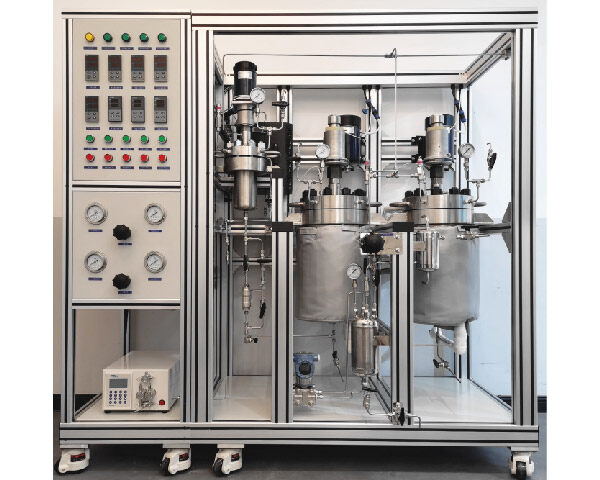
Figure 2 | Cropped editorial view of a parallel-reactor control area. Screens and controls are illustrative; actual data logging and interlocks depend on the ordered system.
4 | Mixing differences may masquerade as catalyst effects
Equal revolutions per minute do not establish equal fluid mixing. Blade geometry, magnetic versus mechanical drive, viscosity, fill level and gas-liquid behavior all matter. A slurry or supported catalyst can require reliable solid suspension; an emulsion or gas-liquid process may be limited by interfacial mass transfer. Mixing geometry may be especially influential when the reaction is sensitive to particle settling or gas transfer into the liquid phase.
Keep stirring hardware and operating windows equivalent where the scientific comparison requires it. If catalyst texture or slurry behavior differs greatly between candidates, record that observation rather than silently adjusting only the most difficult station. The correct adjustment may be to redesign the trial with mixing as a factor, not to assume any observed difference comes from intrinsic reaction activity. Request actual shaft, vessel, stirrer and sealing drawings before transferring a single-vessel procedure to a parallel system.
5 | Protect the sampling and analysis chain
The value of a parallel trial can be lost at the sample port. Samples taken at different effective times may represent different reaction extents. A sample left warm after withdrawal can continue reacting; an unstable product can degrade before analysis. Set a common sampling definition, quench or cooling method where validated, sample mass, container labeling system and analytical turnaround time. Do not assume each reactor offers pressurized sampling unless the specific configuration includes an approved sampling assembly.
For every result, preserve the station ID, charge log, sample time, actual temperature and pressure near withdrawal, analytical method, calibration status and any deviations. If the vessel must be depressurized before a sample is taken, note that the procedure may change dissolved gases or equilibrium and must be evaluated for the analytical question. Pressure equipment should never be opened, vented, sampled or bypassed outside its documented safe operating procedure.
6 | Use controls and replicates to estimate real variation
A strong screening set includes a reference chemistry measured repeatedly, as well as process blanks when those controls answer a meaningful question. Technical repeats estimate measurement or run-to-run variability under comparable conditions, while independent preparations test whether the result survives differences in weighing, mixing and handling. These are not automatically interchangeable forms of replication.
Where the number of positions is small, rotate the baseline across stations and days. Separate station effects, day effects, analyst effects and recipe effects in the analysis when possible. A candidate that exceeds another by a small percentage cannot be called superior until that difference is considered against appropriate experimental variability and the intended performance threshold. A single favorable result may justify further testing, but it does not establish a robust design window.
| Comparison issue | Potential hidden cause | Useful record |
|---|---|---|
| Different heat-up time | Position-specific heat transfer or different charge | Actual temperature trace and time-zero definition |
| Pressure curves diverge | Gas uptake, leak, temperature or vapor effects | Temperature-matched pressure history and leak-check record |
| Solids settle unevenly | Impeller or slurry flow differences | Stirrer geometry, charge and suspension observations |
| Yield shifts with position | Station bias or sampling schedule | Randomized run map with repeated reference |
| Replicates disagree | Preparation, quench or measurement variability | Independent replicate IDs and analytical QC |
7 | Build one data record per station, not one record per run
The minimum station record should capture reactor and position ID, vessel material, installed hardware, actual charge and headspace, stirrer details, gas charging information, temperature and pressure traces, alarm events, sampling events and final analytical outcomes. Time stamps must follow one clock convention. If a controller exports a multi-station history, verify the channels are labeled consistently, the sampling interval is sufficient and any gaps or manual interventions are visible.
Do not treat a plotted trend as proof that the sensor is correctly positioned or calibrated. Calibrate measuring instruments under a documented procedure and investigate any surprising drift before interpreting a chemical mechanism. A simple run-sheet with measured quantities can be more valuable than an elaborate dashboard that stores only target settings. Preserve software versions and control recipes where reproducibility across campaigns matters.
8 | Define safe boundaries before the experiment starts
A parallel reactor is still a pressure system. Safety assessment needs the approved ratings and compatibility of each individual vessel, seals, fittings, gas lines and associated accessories, as well as the relevant operating procedures. Confirm mechanical limits, protective devices, temperature and pressure interlocks, ventilation, pressure isolation and the allowed sequence for shutdown and vessel opening. Do not infer a safe operating limit from the name or appearance of the overall workstation.
Screening several chemistries at once also creates cross-station hazards: different heat releases, pressure-rise patterns and gas compatibility may require different protections. Changes to gas supply, feed lines or sampling ports should be reviewed with the equipment engineer and site safety team before operation. OLLITAL lists optional functions across its parallel reactor models; installed options and limits must be checked against the specific engineering drawing and purchase documents.
9 | Compare hardware quotations against the experimental design
OLLITAL presents A, B and C layouts in its Multi Position Parallel Integrated Reactor family. The published descriptions discuss multi-station control and model-dependent configurations, while optional functions can include gas handling, sampling, feeding and cooling elements. A selection should begin with the number of truly independent conditions required, the needed vessel working volume, required stirring and sampling functions, data-export requirements and the intended operator workflow.
Ask how each reactor station is actually controlled and monitored: are temperature and agitation independently adjustable, how are pressure signals obtained, and which alarms act on a single station versus shared equipment? Request the as-quoted vessel layout, materials, pressure-boundary components, service access, utilities, included accessories and any necessary acceptance test. A brochure listing optional features is not evidence those components will be included in the delivered machine.
| RFQ question | Information to specify or confirm |
|---|---|
| How many independent studies? | Number of stations, common vs independent setpoints, rotation plan |
| What chemistry and charge? | Materials, fill range, viscosity, solids and chemical compatibility |
| What is recorded? | Per-station temperature/pressure history, data export, alarms |
| How are samples taken? | Timing, isolation, sampling hardware and site-approved procedure |
| How is comparability demonstrated? | Commissioning checks, repeat reference runs and acceptance evidence |
10 | What a successful site acceptance trial should prove
An acceptance trial is more useful when its endpoints are agreed before delivery. First verify station identification, control response and alarm behavior with the installed instruments under the approved test procedure. Then review temperature trajectories, mixing operation where observable, recorded data integrity and the procedure for sampling or simulated sampling if fitted. Finally, run a representative, appropriately authorized process or surrogate trial to establish a baseline for repeatability. A water-based checkout alone does not guarantee the behavior of a viscous slurry or gas-demanding reaction.
Document any limitations in the initial test, particularly if the final chemistry uses different solvents, solids, gases or temperature ranges. Commissioning provides evidence of installed hardware performance, while process validation or scientific reproducibility requires additional trials using the real application. These should not be conflated or promised generically as “identical results” across all stations.
The decision: faster screening must produce defensible comparisons
The real benefit of a parallel high-pressure reactor is the ability to compare alternatives efficiently under known and recorded conditions. Fast throughput has limited value if apparent winners reflect temperature histories, stirring differences or samples taken at different effective times. Design each campaign so that the controlled variable is unambiguous, station effects are tested, and another researcher can reconstruct the result.
At OLLITAL, we recommend sending the proposed study matrix, vessel fill range, materials and intended pressure/temperature conditions when requesting a parallel reactor configuration. This helps clarify which vessel layout, instrumentation, control scheme and sampling options are necessary before a quotation is finalized.
Review the Multi Position Parallel Integrated Reactor for the published family configuration, or explore the Reactor Series for related equipment choices. Confirm model-specific limits and options in the quotation.
Planning a multi-station reaction-screening project? Share the experiment matrix and required independent controls, and contact OLLITAL to discuss a suitable engineering scope.