Spray Dryer Powder Recovery: Cyclone Losses, Wall Deposits and Filter Loading
2026-10-20 14:25:08A low powder yield is not automatically a cyclone problem.
A spray dryer may produce an apparently dry powder while too little saleable material reaches the collection container. The missing mass might remain on the drying-chamber wall, settle in a duct, travel through the cyclone as fines, accumulate in a downstream filter, or leave with deposits removed during cleaning. Those mechanisms require different corrections. Increasing air velocity or heating temperature without identifying the loss location can make the result worse.
At OLLITAL, we recommend reviewing powder recovery as a complete process balance, not as an isolated collector efficiency figure. The objective is to protect both the amount and the quality of usable powder, while keeping the exhaust train stable and allowing safe inspection and cleaning.
1 | Calculate recovery using a consistent dry-solids basis
Start with the actual solids delivered to the dryer during the measured interval. For a batch of water-based feed, the input dry solids are the mass of feed processed multiplied by the measured feed solids mass fraction. Compare this with the dry matter represented by collected powder, correcting for its measured residual moisture. In continuous operation, include start-up, shutdown and any material retained in the system during the measurement window. These boundaries matter as much as the arithmetic.
Useful definition. Dry-solids recovery (%) = 100 x accepted powder dry solids / feed dry solids entering the test boundary. Record whether the numerator includes only the main cyclone receiver, separately approved secondary collected fractions, or material reclaimed during cleanout. State the moisture basis and the start/stop times alongside the percentage.
This is a yield metric, not a universal specification of cyclone collection efficiency. A cyclone efficiency assessment requires information on the particulate entering and leaving that separator under defined gas-flow and particle conditions. Also distinguish gross collected powder from accepted saleable powder: an off-spec fraction may be captured physically but still be unsuitable for the next operation.
2 | Make a location-based loss map before changing setpoints
When apparent recovery falls, inspect the system in a logical sequence after bringing equipment to a safe condition under its approved procedure. Compare each observation against the previous stable run, not against an imagined universal target. The most useful clues are where deposits appear, how their texture changes, and whether airflow or pressure trends moved during the batch.
| Observed symptom | Plausible mechanisms | What to verify first |
|---|---|---|
| Cyclone receiver is light; fine powder appears downstream | Particle-size distribution; gas-flow deviation; separator geometry or internal condition | Sampling basis, gas rate, collection seal and cyclone outlet |
| Thick wet or tacky layer on chamber wall | Incomplete drying, sticky product behavior, droplet impact, altered flow pattern | Feed state, inlet/outlet trends, atomizer condition and deposit location |
| Dry buildup in bends or transition ducts | Local velocity changes, dead zones, roughness or electrostatic adhesion | Duct inspection map and pressure-drop trend |
| Filter differential pressure rises unusually | Elevated fines load, filter blinding, moisture or cleaning-system problem | Actual DP, filter condition, airflow and cleaning sequence |
| First run looks acceptable, later runs deteriorate | Residual deposits, humidity pickup, warm-up/shutdown history or changing feed | Cleanout records, campaign schedule and batch-to-batch conditions |
3 | Cyclone separation depends on the powder and the gas
A cyclone uses rotational gas motion to separate particles with sufficient inertia from the carrier stream. Fine, low-density particles are generally harder to remove than larger or denser particles under otherwise comparable conditions. The useful result also depends on actual air volume, temperature, pressure, particle loading, inlet geometry, wall condition and downstream resistance. A cyclone that collects one formulation successfully may perform differently with another.
A low receiver mass can mean reduced delivery of powder from the chamber rather than weak separation at the cyclone. Conversely, a visibly clean chamber is not proof of high powder recovery when very fine particles continue into the outlet stream. Measure or characterize the powder-size distribution where feasible. Confirm the designed gas throughput and inspect the complete collection path, including discharge sealing and receiver changes, before recommending a replacement cyclone.
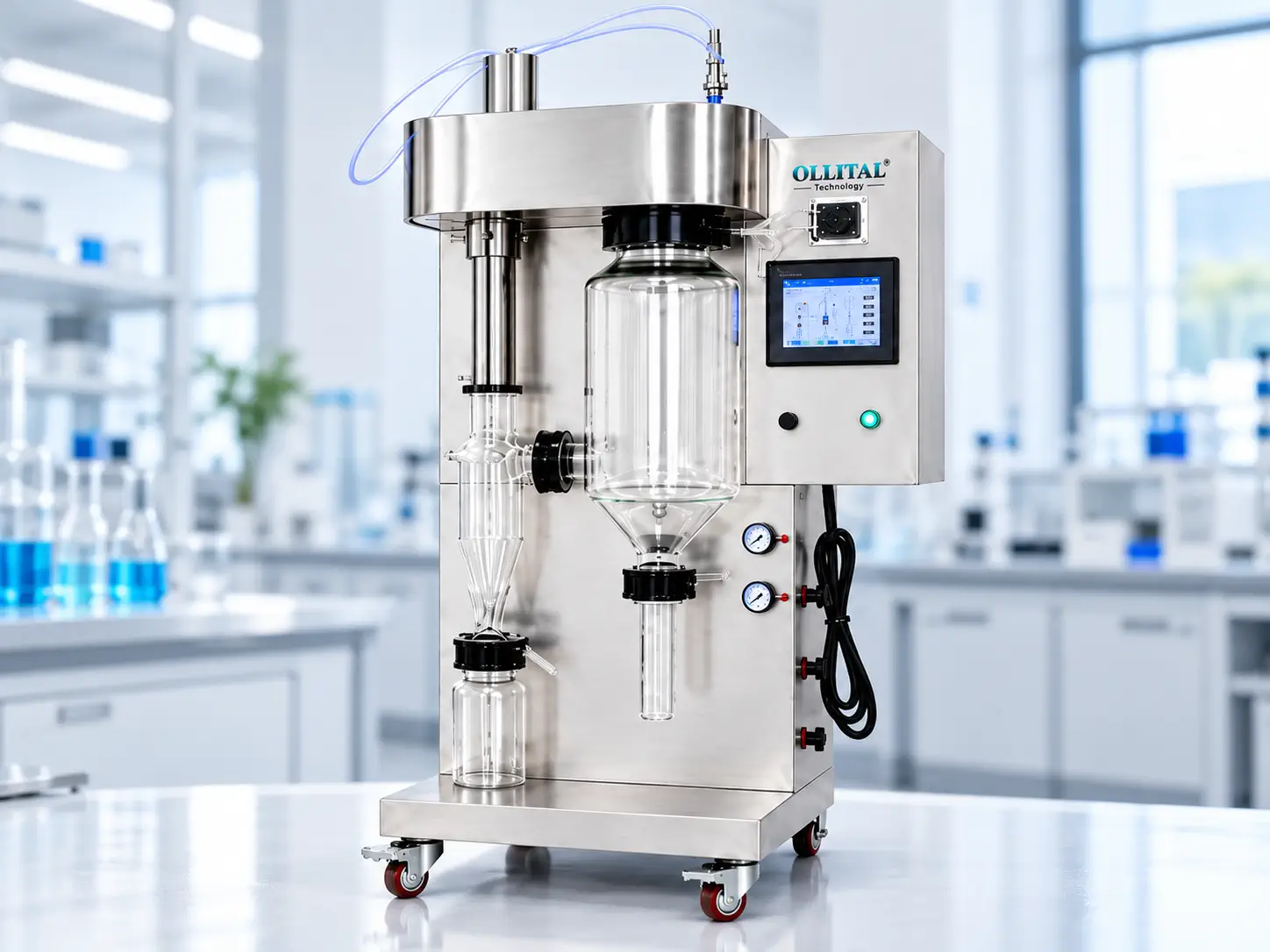
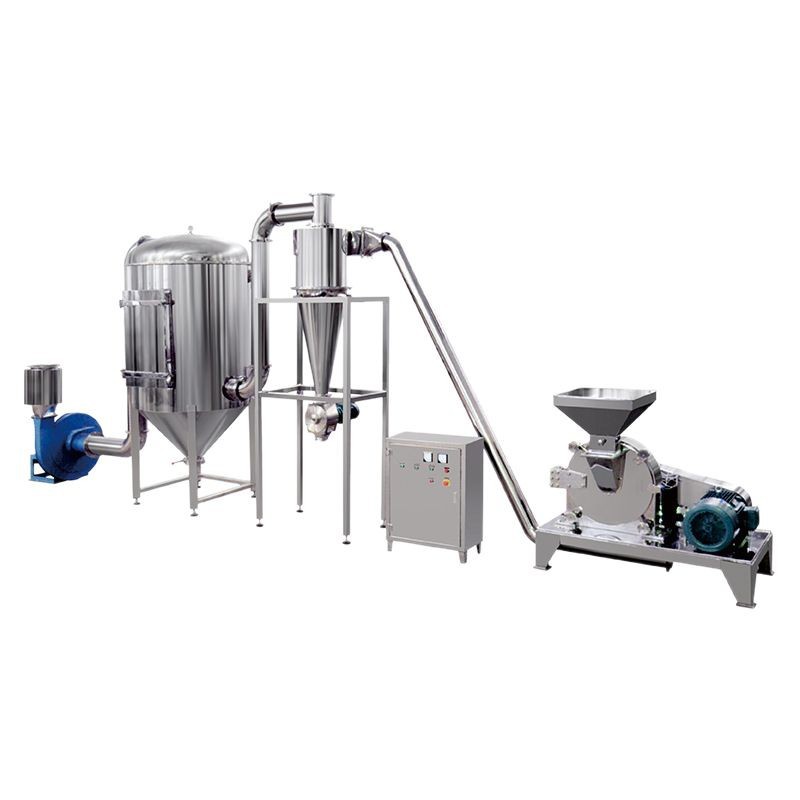
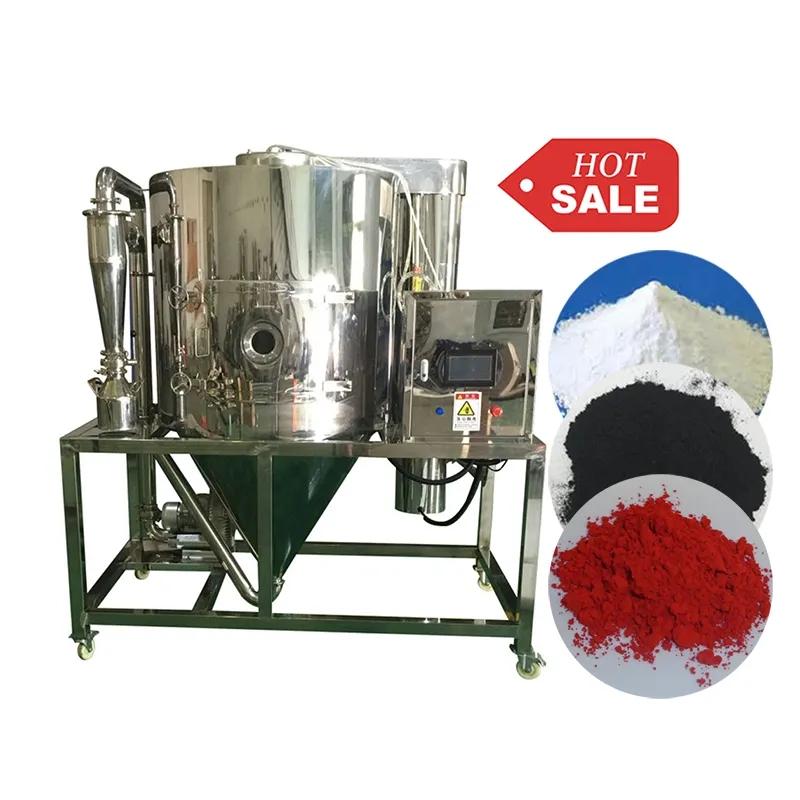
Figure 1 | Powder transport and cyclone collection concept. Actual separator efficiency and any downstream filtration stage depend on the specified plant design and measured material properties.
4 | Read wall deposits as process evidence
Wall deposition often results from a combination of droplet trajectories, particle moisture, material tackiness and local wall conditions. Particles that strike a surface before forming a sufficiently dry shell can adhere. Other materials may become sticky at particular combinations of temperature, residual water and composition even if the average outlet temperature looks reasonable. Deposits near the atomizer, ceiling, cylindrical wall or lower cone can point to different airflow or drying mechanisms.
A deposit pattern is a diagnostic clue, not a stand-alone diagnosis. Compare it with feed viscosity and solids, atomization behavior, spray direction, gas distribution and the batch temperature history. Document whether the layer is wet, gummy, brittle or loose. In some systems the wall is not the only issue: hot shutdown or humid idle periods can change the condition of a residual deposit and make subsequent batches behave differently.
Avoid the shortcut of simply increasing inlet temperature. Higher heat can help dry some feeds but can also damage sensitive material, increase sticky-surface behavior or shift where product adheres. Changes to drying conditions should be evaluated against moisture, particle size, color or other critical product attributes, with appropriate equipment limits.
5 | The filter captures particles, but that is not the same as usable yield
A bag filter, cartridge stage or other final collector may be installed to control fine powder that escapes a primary separator; not every OLLITAL machine has the same exhaust arrangement. A stable filter differential pressure and suitable airflow are relevant operating indicators, but neither guarantees that its captured powder is acceptable for reuse. Some captured material may be held for a separate quality decision or disposed of, depending on product and contamination requirements.
Compare differential pressure at the same flow and temperature conditions. Rising resistance can reflect genuine loading, damp powder, blinding or a cleaning-system problem, while unexpectedly low resistance may indicate leakage or an ineffective seal. For powders with combustible-dust potential, exhaust and collector design also require a project-specific hazard assessment; the presence of a bag filter should never be treated as a complete safety solution.
6 | Feed and powder properties explain why a copied recipe fails
Formulations that look similar as liquids may produce powders with different density, particle size, hygroscopicity and surface tack. Sugar-rich ingredients, concentrated extracts, emulsions and mineral suspensions do not necessarily share a useful drying window. Solids level and upstream feed preparation affect droplet formation; after drying, the powder may vary in fragility and how readily it is entrained or deposited. That is why the same nominal inlet temperature and feed rate do not ensure the same collection result.
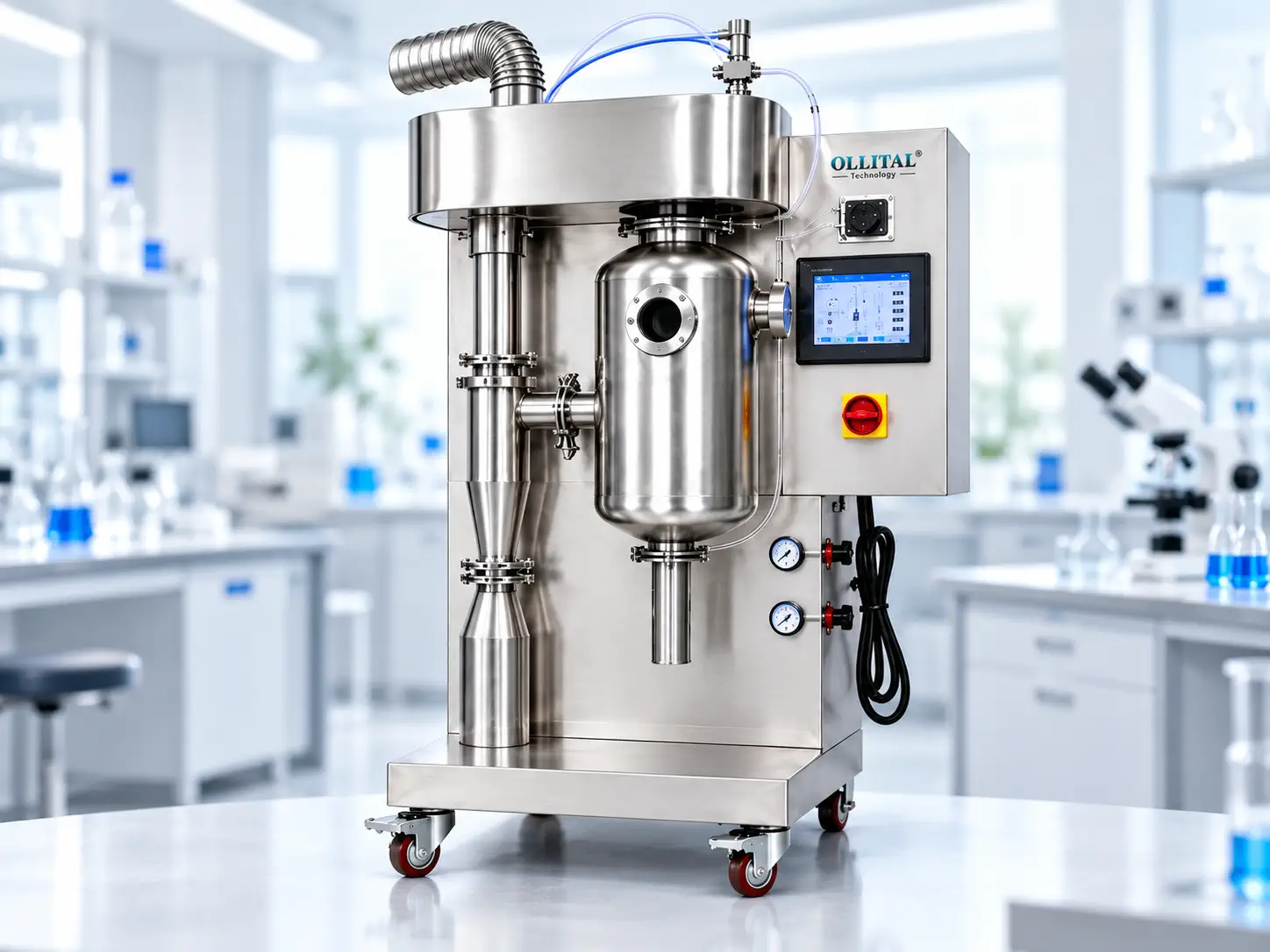
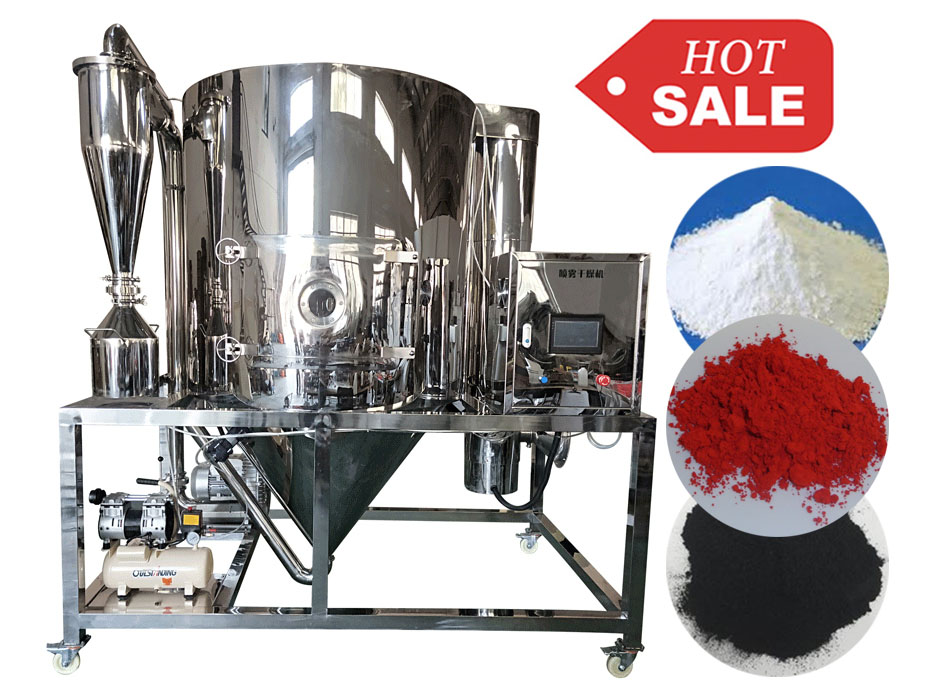
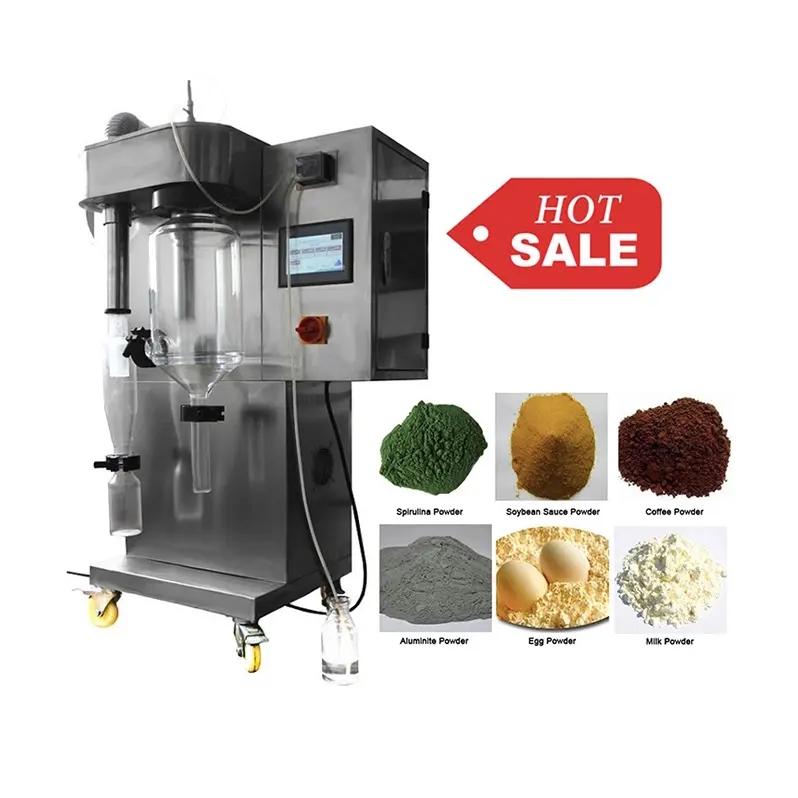
Figure 2 | 2L stainless-steel chamber laboratory spray dryer visual, aligned more closely with the customer’s reference product appearance. Shown here as an editorial product illustration.
For a credible trial, record feed concentration, approximate rheology, relevant particle or droplet characteristics, atomizer setup, airflow, operating pressure where applicable, and the intended powder specification. Where product stickiness is strongly temperature- and moisture-dependent, use controlled tests to establish the feasible window rather than assuming that a catalog setpoint can solve the problem.
7 | Run a controlled recovery investigation
A disciplined trial changes one technically relevant variable at a time, or uses a documented test design where variables interact. Establish a stable feed lot, known collection containers and a standard clean-start condition. Record the mass and dry-solids input, the powder collected at each approved point, powder moisture and the quantity and location of material recovered during cleanup. Where safe and feasible, sample retained material separately from accepted output.
Trend key operating measurements across start-up, steady running and shutdown: inlet and outlet temperatures, feed flow, drying gas or fan indicators, pressure conditions, cyclone discharge behavior and filter differential pressure if fitted. Include cleaning and equipment configuration notes. The test needs sufficient operating time to reveal buildup; a short, visually successful spray does not represent a longer production campaign.
The aim is causal attribution, not just a better percentage. If a changed cyclone improves receiver yield but significantly worsens pressure drop or changes the powder specification, the modification may not be a net improvement. Likewise, a small gain in wall recovery may be offset by difficult cleanup, cross-batch carryover or unusable powder.
8 | Define the correct collection package at the RFQ stage
A supplier proposal should identify the actual recovery arrangement in the scope of supply. Ask for a line drawing locating the drying chamber, air outlets, cyclone stage, any secondary collection or filter, product containers, isolation points, pressure-monitoring points and cleanout access. Confirm which elements are included in the quoted base machine and which require optional engineering. Published photographs of a similar dryer are not evidence that all pictured accessories are included in a particular order.
For a meaningful equipment comparison, provide a representative feed description, expected solids concentration, desired throughput, target residual moisture and particle characteristics, acceptable product-temperature limits, site utilities and required material handling. Discuss whether the objective is primarily saleable powder recovery, exhaust emission management, cleanability or an agreed combination. Those goals can favor different equipment choices.
OLLITAL lists both spray drying systems and industrial-scale centrifugal dryer configurations on its website. The product pages establish the equipment category and the availability of customized configurations, but they do not supply a verified collection efficiency for your formulation. A specific recovery guarantee, if needed, must be established through a mutually agreed test and acceptance protocol.
9 | A practical acceptance checklist for buyers
| Question to resolve | Evidence worth requesting |
|---|---|
| What counts as recovered product? | Defined main/secondary receivers, dry-basis calculation and off-spec handling |
| Which feed is the design based on? | Representative recipe range, solids, viscosity and moisture target |
| How is powder carryover checked? | Sampling location, method and operating airflow conditions |
| How are deposits managed? | Access, approved cleaning procedure and downtime assumptions |
| What is the actual collector train? | Flow diagram, pressure budget and included components |
| What must the trial prove? | Agreed recovery, product quality and operating stability criteria |
10 | Test the whole system after a change
Improvement work should be judged by a repeatable comparison, not by a single attractive receiver weight. An intervention at the cyclone, atomizer or exhaust filter can alter the upstream gas balance; a change in feed solids can alter both drying duty and apparent yield. Once the system has been modified, repeat the recovery balance at equivalent feed and operating conditions, using calibrated instruments and the same definition of accepted powder. Where the process runs through several product lots, compare both within-lot and between-lot variability.
For an industrial unit, a useful commissioning record connects the equipment configuration to the measured result. It should show the current line drawing, fan or airflow setting, separator discharge arrangement, filter differential pressure where fitted, powder moisture and particle data, plus the type and estimated quantity of retained material found during post-run inspection. Note precisely what changed from the preceding configuration. Without this record, later staff may repeat failed adjustments or misinterpret a change in the feed as a machine problem.
11 | Keep quality and cleanout decisions separate from recovery
Not all material recovered from a surface or a filter should be returned to saleable product. Residence time on a warm wall, exposure to ambient humidity during shutdown, and the method used to remove deposits can affect quality or introduce contamination. Define the disposition of each recovered fraction through the plant quality system. A higher gross recovery figure should not obscure color changes, elevated moisture, damaged particles or hygiene concerns.
For processes that switch products, consider the time required for approved cleaning, inspection and restart. For continuous operation, consider how often receivers must be exchanged and what prevents accidental air ingress or contamination. These practical details can affect overall production output as much as a headline separator percentage. Ask suppliers to identify accessible inspection points and the safe shutdown conditions for collecting samples or servicing the recovery train. Operations on pressurized, hot or dust-laden equipment must follow approved site procedures rather than improvised manual checks.
The decision: specify a complete recovery result
The best powder collection package is not necessarily the cyclone with the largest nominal efficiency claim. It is a system that dries the actual feed, preserves the required powder properties, reliably moves acceptable product into the intended receiver, and manages residual dust within the site safety and maintenance strategy. Locating the dominant loss before changing hardware is the quickest way to avoid solving the wrong problem.
At OLLITAL, we encourage buyers to provide a short process brief, a representative product description and any existing mass-balance or recovery observations. We can then discuss the suitable dryer family, expected recovery path, collection components and a realistic equipment-review checklist.
Explore the OLLITAL Spray Dryer category, review an industrial spray dryer example or the centrifugal spray dryer product family for the equipment context. Confirm the exact configuration for your application.
Need to compare powder recovery configurations for your feed? Send the solids concentration, target throughput, product moisture limit and any observed losses. Contact OLLITAL for a technical discussion.