How to Design Comparable Bioreactor Experiments: Controls, Replicates and Fermentation Process Data
2026-10-16 16:27:27Controls, Replicates and Fermentation Process Data
The central problem: a different outcome is not always a better process
A fermentation development team may test a new feed concentration, agitation setting or medium component and observe a higher final titer in one run. That result is worth investigating, but it does not prove the new setting caused the improvement. A different inoculum age, vessel fill volume, sample timing or DO probe response can create an apparent benefit even when the tested change is neutral. The same issue arises when two ostensibly identical bioreactors respond differently to a shared control recipe.
The purpose of comparable bioreactor experiments is to make every meaningful difference explicit. At OLLITAL, we recommend treating experiment planning as part of the equipment discussion. A bioreactor controller can apply setpoints and record trends; it cannot decide which variables must be held constant, which conditions deserve replication or how a culture should be judged. This guide offers a practical framework for microbial fermentation R&D teams comparing process conditions in one vessel over time or across several vessels in parallel.
1. Write one decision question before configuring the vessels
A useful study starts with a narrow question: “Does a lower feeding rate during the production phase improve yield at acceptable growth?” is more testable than “Which fermentation process is best?” The first identifies a controllable factor, an operating phase, a response and a constraint. Other questions may target inoculum fraction, carbon source, pH trajectory, temperature shift, aeration mode or agitation strategy. Choose a question that the available instruments and sampling plan can actually answer.
Define the primary response before the run. Depending on the process, this might be product concentration, yield per substrate consumed, specific production rate, culture growth or a quality attribute. Supporting responses can include time to reach a target biomass, residual substrate, DO excursions, antifoam consumption or total batch duration. Avoid declaring success solely because a controller trend looks smoother; a smoother trace is not necessarily a better biological result.
2. Separate changed factors from conditions that must remain comparable
Make two lists. The first contains deliberate study factors: for example, two feed strategies or three operating temperatures. The second lists controlled background conditions, including strain or inoculum source, seed age and physiology, medium lot or preparation method, total and working volume, vessel geometry, sensor calibration, sampling procedure and the criterion for changing the process phase. A comparison is weakened whenever a background condition changes at the same time as the test factor.
Setpoints alone are not enough. Two vessels with the same DO target can have very different gas flow, agitation demand and oxygen-transfer reserves. Even identical recipe files may behave differently if controller cascade settings, electrode condition, impeller geometry or exhaust restrictions differ. Preserve both the requested setpoints and the observed control outputs for later interpretation.
For an example of the control functions available to discuss, the OLLITAL Laboratory Small Glass Bioreactor Fermenter lists temperature, pH, DO, agitation, gas supply, feeding and foam-management functions. The specific purchased configuration and data fields should still be confirmed for the actual study. The product page is a capability reference, not proof that several vessels are automatically synchronized or statistically equivalent.
3. Decide what counts as an independent replicate
A biological replicate is an independently prepared and cultivated unit that repeats the full process under the specified treatment. Repeated analytical measurements of one broth sample are instead technical replicates. Both are useful, but they answer different questions. Three assay readings from one fermentation do not provide the same evidence about batch-to-batch process variation as three independent fermentations.
Independence also depends on the question. If multiple vessels share the same seed preparation, medium batch and gas supply, some sources of variability are shared. Those vessels can help compare treatments but may not represent independent days or independent inoculum preparations. If the study is intended to support reproducibility across manufacturing days, include runs or blocks on different days instead of measuring only same-day vessel-to-vessel variation.
The number of runs should follow the expected variability, the minimum meaningful difference and the available resources. A screening study may start small, but a claim of reliable improvement usually needs confirmation. Do not use a fixed “three runs is enough” rule without considering statistical power, operational risk and whether the biological response is inherently variable.
4. Standardize preparation before testing the first condition
Record how inoculum was prepared, how medium and feeds were made, whether calibration was completed, and when each vessel was charged. For pH and DO, a valid calibration record is more valuable than a screenshot of a good-looking number. Note probe age or replacement, calibration method, gas composition and any deviations that occurred before inoculation. A changed filter, different connection or re-prepared medium batch can affect reproducibility even if the intended experimental factor did not change.
A simple preparation register is often enough to expose hidden differences: vessel identifier; culture and seed identifier; medium lot; starting volume; setpoint or recipe version; probe calibration status; gas setup; planned sampling times; and the person approving readiness. Before a critical comparison, verify that the same definitions were applied at every station. Consistency should be checked at the point of preparation, not reconstructed from memory after the run.
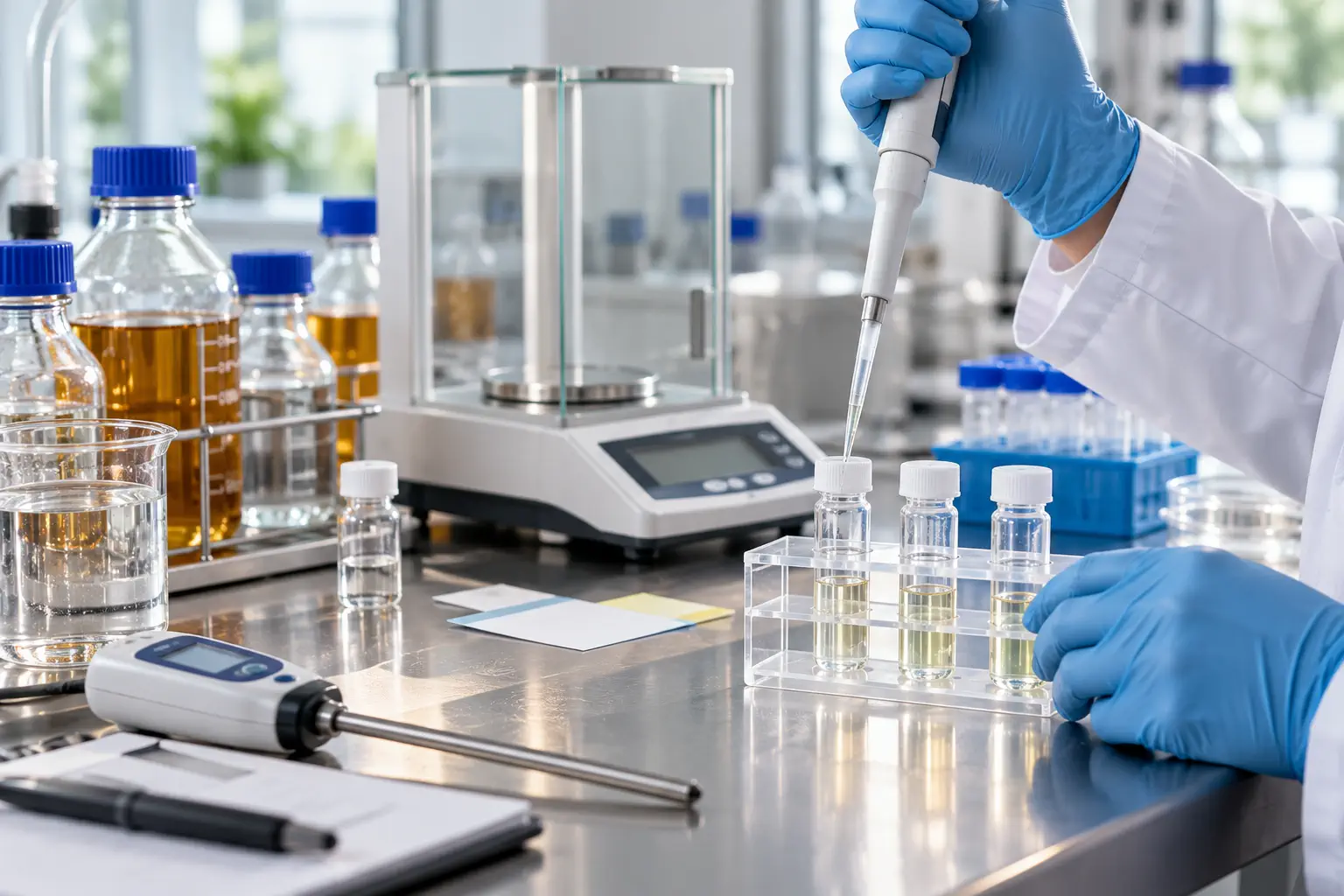
Figure 1. Sample-handling consistency matters: independent culture identity, preparation records and measurement timing must be preserved across experimental conditions.
5. Choose a study layout that fits the scientific question
One-factor-at-a-time: straightforward, but limited
Changing only one factor while holding the others as constant as practical can be useful for preliminary feasibility work. It is easy to explain and may suit an urgent engineering question. However, it does not reveal important interactions when two process factors affect one another. An apparent benefit from higher agitation, for example, may depend strongly on the available aeration rate or on the stage at which feeding begins.
Factorial screening: efficient for interaction discovery
When multiple variables may matter, a small factorial screening design can help estimate main effects and interactions more efficiently than independent sequential changes. Factors should be chosen within feasible and validated operating ranges. Include practical constraints such as oxygen supply, probe operating limits, foaming risk and equipment utilities. The goal is to find a promising experimental region, not to force an automatic formula onto a living system.
Blocks and confirmation runs: protect against time-related variation
If runs cannot all be performed in one batch, group them into defined blocks, such as day, seed preparation or medium lot. Randomize treatment order where practicable within each block. Include a stable reference condition to detect drift across the campaign, then perform confirmation runs using the most promising settings. A baseline repeated over time is especially valuable when fermentations last long enough for probe condition, operating practice or inoculum preparation to shift.
6. A practical comparison matrix for the experiment plan
Register item | Record at design time | Why it matters |
|---|---|---|
Scientific factor | Deliberate treatment level and planned operating phase | Do not change it silently mid-run |
Culture background | Strain, seed history, inoculum age, medium and working volume | Same nominal volume does not ensure same physiology |
Hardware and control | Vessel geometry, probes, calibration, agitation and gas configuration | Store both setpoint and actual output |
Sampling and assay | Time reference, sample site, handling interval and assay method | Assay timing can change the apparent response |
Replicate structure | Independent fermentations, shared batches, blocks and technical repeats | Do not count repeated assays as independent runs |
Decision criterion | Primary response, acceptance range and excluded-run rules | Define before seeing results |
Table 1. Design-time comparison register. Values and acceptance criteria depend on the microorganism and study purpose.
7. Capture the process trajectory, not only the harvest result
A final concentration without the trajectory can hide the reason for an outcome. Preserve synchronized timestamps for temperature, pH, DO, agitation, gas flow, feeding events, antifoam additions, and major operator interventions. Add broth analysis and off-gas data if they are genuinely available, appropriately calibrated and relevant. If a process controller stores one-second readings while laboratory samples are collected every few hours, establish a common time reference rather than pretending the resolution is the same.
Keep measurement integrity visible. Mark sensor calibration events, disconnected probes, controller-mode changes, missed samples and major interventions. If one run required emergency foam suppression and another did not, that difference should accompany the response values. A clean average can be misleading when one vessel crossed an operating limit or had to pause a feed pump during the critical phase.
The OLLITAL OEM Benchtop Bioreactor OLT-100-C2 page describes process measurement and USB data export among its listed functions. Ask the supplier to demonstrate which channels are exported in the actual ordered configuration, how timestamps are formatted and whether pump events and alarms are included. Data export is not the same as a fully validated electronic batch record.

Figure 2. Reviewing synchronized trends together with sample logs helps distinguish treatment effects from time shifts, sensor drift and unscheduled interventions. Screen curves are illustrative.
8. Interpret differences without overclaiming causation
Before ranking treatments, check whether comparable runs actually followed comparable execution paths. Did one culture begin at a different biomass level? Did a sampling delay occur? Was airflow near its configured maximum only in one vessel? Did control changes follow a probe disturbance rather than a biological shift? Such factors can explain an apparent treatment effect and should be included in the analysis or used to justify a pre-defined exclusion.
Separate effect size from statistical significance. A large numerical difference may be unreliable with high batch variability or few independent runs; a small but statistically consistent effect may not justify changing the operating procedure. Practical decisions should weigh product quality, yield, operability, resource use and process robustness together. Use appropriate statistical analysis for the actual design, including blocks or repeated measures where relevant.
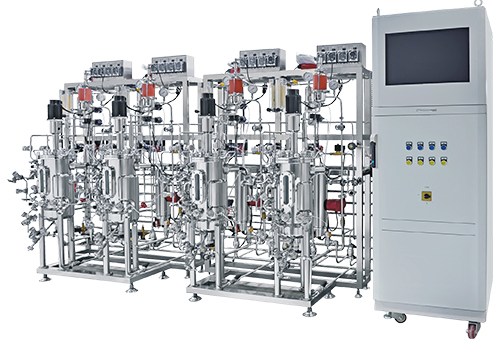
When the study involves parallel vessels, do not assume “same controller model” means equivalent performance. Verify comparability of sensors, heating and cooling response, gas supply and available feed channels at the tested operating conditions. The OLLITAL customizable glassware bioreactor is a useful starting point for discussing process controls, while any true multi-vessel fermentation configuration must be scoped and confirmed separately with the engineering team.
9. Translate study findings into an equipment requirement
Well-designed experiments do more than identify a better operating point. They clarify what equipment must achieve reliably. A finding that DO becomes limiting at a specific phase may translate into an aeration and agitation requirement. A consistent pH response to a feed step may prompt review of pump sizing, control settings and sensor response. A wide variation between nominally identical trials may reveal a need for more consistent inoculum preparation or better run logging before a larger system is purchased.
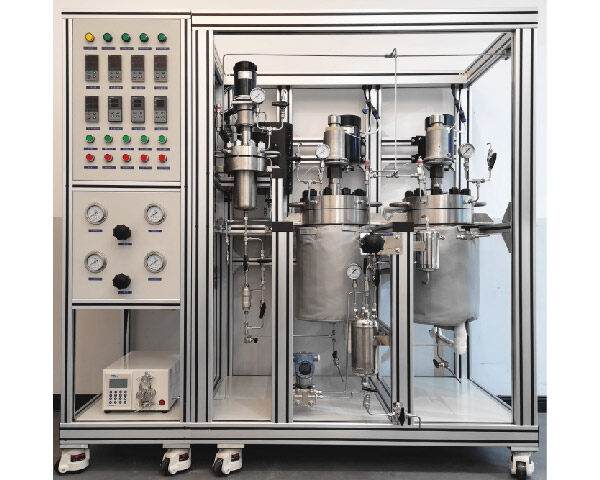
When asking for a new bioreactor, provide a compact description of the intended study: organism type, practical working volume, number of concurrent independent conditions, required channels per vessel, sampling needs, event data requirements, utility limits and any expected process constraints. If you need parallel fermentation studies, specify whether each vessel must independently control temperature, gas, pH, DO and feeding, and whether cross-vessel comparisons require aligned export formats. Do not infer those capabilities merely from the existence of a multi-station chemical reactor elsewhere in a catalog.
What a strong experiment leaves behind
At the end of the campaign, a useful evidence package includes the versioned study plan, randomization or blocking record, vessel and seed identities, calibration and preparation records, setpoints and actual trends, scheduled and unscheduled interventions, laboratory assay results, any exclusions with reasons, and a short decision note. Another engineer should be able to understand what changed, what stayed stable, which units were independent and why the result supports a next step.
At OLLITAL, we recommend making this evidence package part of the conversation before committing to a configuration. It can help separate needs that belong to the culture protocol from hardware requirements that a supplier can actually engineer.
Planning a fermentation comparison across several conditions? Send the number of vessels, target working volume, variables to be tested, required sensors, gas and feed controls, sampling plan and data export expectations through Contact OLLITAL. We can review the appropriate equipment scope against the experiment rather than relying on a generic “parallel bioreactor” label.