Bioreactor Impeller Selection for Microbial Fermentation: Mixing Efficiency, Oxygen Transfer, Shear
2026-10-19 17:30:08An engineering guide to selecting mixing hardware from culture requirements, gas loading and changing broth behavior
The impeller question begins with the broth, not the motor speed
A fermenter can hold the correct temperature and pH while delivering very different growth and product results simply because its mixing behavior is unsuitable for the culture. The agitator has to circulate liquid, distribute gases and feeds, manage suspended material, and help limit temperature or concentration gradients. It performs those tasks while the broth changes through the run. A setpoint of 400 rpm describes shaft rotation, but it does not establish that any of those tasks are being performed adequately.
At OLLITAL, we recommend treating bioreactor impeller selection as a process-engineering decision rather than an accessory decision. The correct questions are what must remain uniform, how much oxygen must reach the organisms, what the fluid becomes at peak biomass, and which mechanical stresses the culture can tolerate. Only then do impeller shape, number, diameter, spacing and drive capability become meaningful.
1. Define the job: suspension, circulation, gas dispersion or gentle handling
Mixing priorities differ across fermentation applications. A relatively low-viscosity bacterial or yeast culture may be limited by oxygen delivery as biomass increases. A filamentous fungal culture may develop a strongly shear-dependent apparent viscosity and local stagnant regions. A suspension with pellets or dense solids also needs sufficient circulation to prevent accumulation at the bottom. A shear-sensitive culture may require a much gentler approach even when the liquid appears uniform.
The first design brief should therefore identify organism type, expected rheology, aeration requirement, solids content, feed points, target working-volume range and likely growth phase at maximum demand. A system can be well mixed at inoculation and poorly mixed later. Looking only at early-batch observations leads to optimistic sizing and misleading comparisons between suppliers.
2. Radial-flow and axial-flow impellers are not interchangeable
A radial-flow impeller pushes liquid predominantly outward from the shaft, promoting localized turbulence and, in some configurations, gas breakup. Radial turbines are often considered when gas dispersion is a major duty. An axial-flow impeller promotes flow along the shaft, creating a larger circulation loop that can help distribute feeds or maintain broader vessel turnover. Pitched-blade and hydrofoil-style geometries can provide axial flow, but actual performance depends on blade design, pumping direction and operating regime.
Neither family is a universal winner. Radial turbines can impose a relatively high power demand and localized dissipation; axial designs can improve bulk circulation but still need to be evaluated under the real gas load. Multi-impeller arrangements may combine duties along the vessel height. The geometry of the vessel, baffles, shaft, headspace, sparger and liquid level will affect the resulting flow pattern. An isolated catalogue image of a blade cannot predict whole-vessel performance.
Buyers should ask for the actual installed impeller arrangement, including blade type, diameter, number, shaft position and spacing. A statement such as “stainless steel stirring blades” does not provide enough information to compare competing offers. If interchangeable impellers are proposed, confirm which combinations are mechanically and operationally approved for the ordered drive and vessel.
3. Aeration changes the job the agitator is doing
In an aerated bioreactor, oxygen is transferred from gas bubbles to the surrounding liquid and then to the culture. Impellers influence bubble breakup, circulation and gas residence time, while the gas delivery system introduces its own flow patterns. In some cases, more agitation can improve oxygen transfer. In others, changes in foam, bubble coalescence, gas holdup or power consumption can weaken the benefit. The sparger position, gas composition and actual gas flow must therefore be considered alongside mixing hardware.
A system can also lose useful circulation when gas loading becomes unsuitable for the impeller. Engineers refer to regimes such as flooding and loading, but the exact onset depends on the design. For procurement, this means the supplier should be asked for performance evidence or a defensible design rationale at the intended gas rate, not merely a maximum shaft speed specified with an empty or ungassed vessel.
4. Connect agitation to the dissolved-oxygen control strategy
A DO cascade may respond to falling dissolved oxygen by increasing agitation, airflow or oxygen enrichment in a defined order. The response is only useful if the hardware can deliver additional mass transfer without crossing torque, shear, foam, pressure or cooling limits. If the controller is already near a mechanical limit, a higher setpoint on the screen cannot create the missing oxygen-transfer capacity.
Interpret an increasing RPM trend in context: did airflow change, did a feed event increase oxygen demand, did the DO probe pass its checks, and did the culture become more viscous? A fixed DO setpoint cannot reveal the limiting mechanism by itself. When comparing configurations, buyers should request the sequence of control actions and the available operating range of each actuator. The intention is to preserve process performance, not blindly copy a bench recipe.
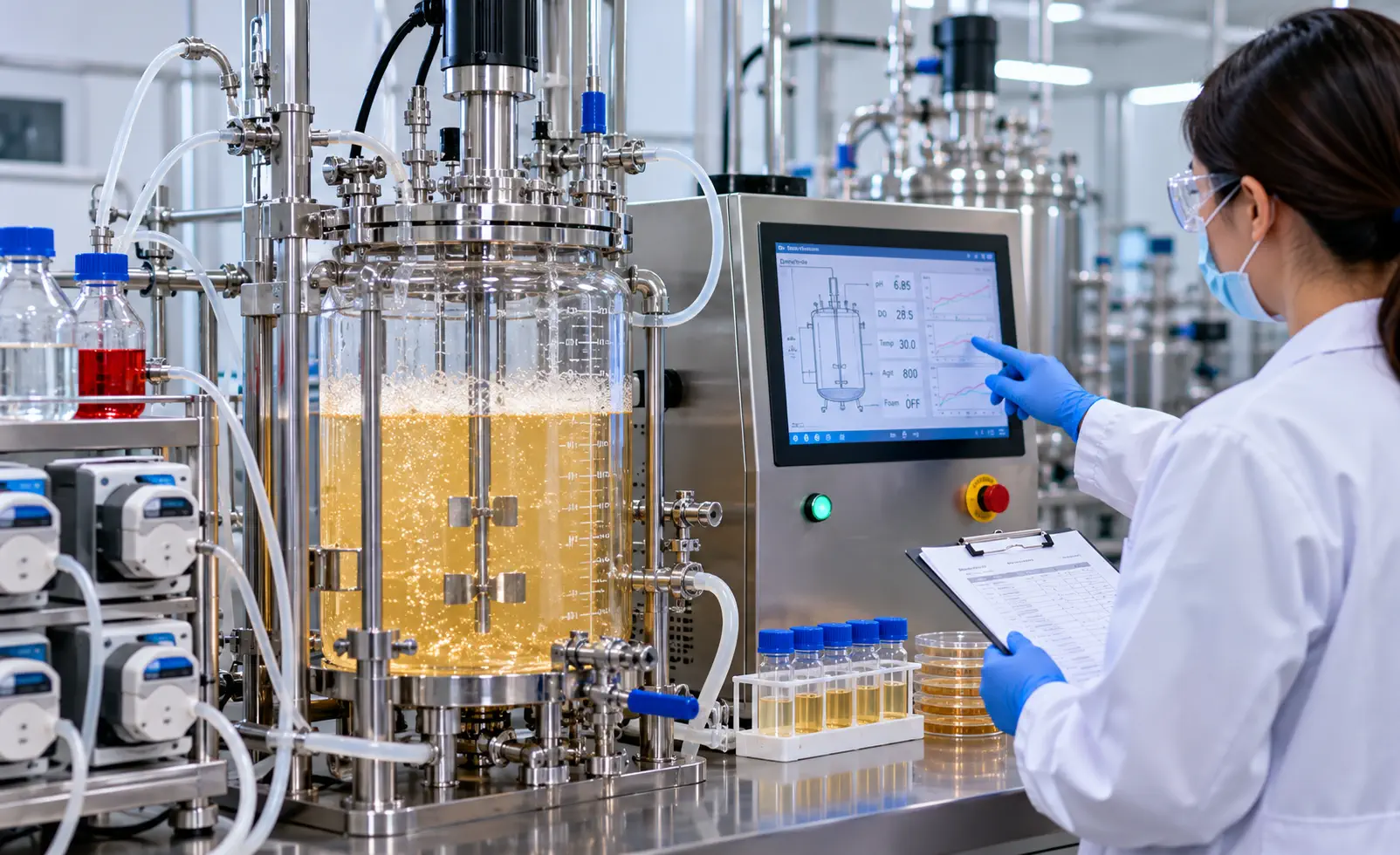
Figure 1. Illustrative operational monitoring of a stirred fermentation vessel. Displayed readings are fictional and do not represent OLLITAL equipment or experimental results.
5. Broth viscosity can turn a suitable start-up design into a poor peak-biomass design
Culture broth does not always behave like water. As cell concentration, extracellular polymers or filamentous networks increase, the liquid may thicken or become non-Newtonian. Some broths exhibit shear thinning, meaning their apparent viscosity depends on local shear rate. That introduces a distribution problem: material close to the impeller may move vigorously while fluid farther away circulates slowly. A reassuring surface vortex does not prove the whole vessel is mixed.
If a batch exhibits delayed pH correction, uneven nutrient response, worsening oxygen limitation or variable samples from different locations, consider mixing time and broth rheology as possible contributors. Other causes remain possible, so independent samples and instrument checks matter. A practical equipment specification should describe viscosity changes over the process rather than giving a single water-like value. Where viscous conditions are expected, torque margin, impeller arrangement and the number of circulation zones deserve particular attention.
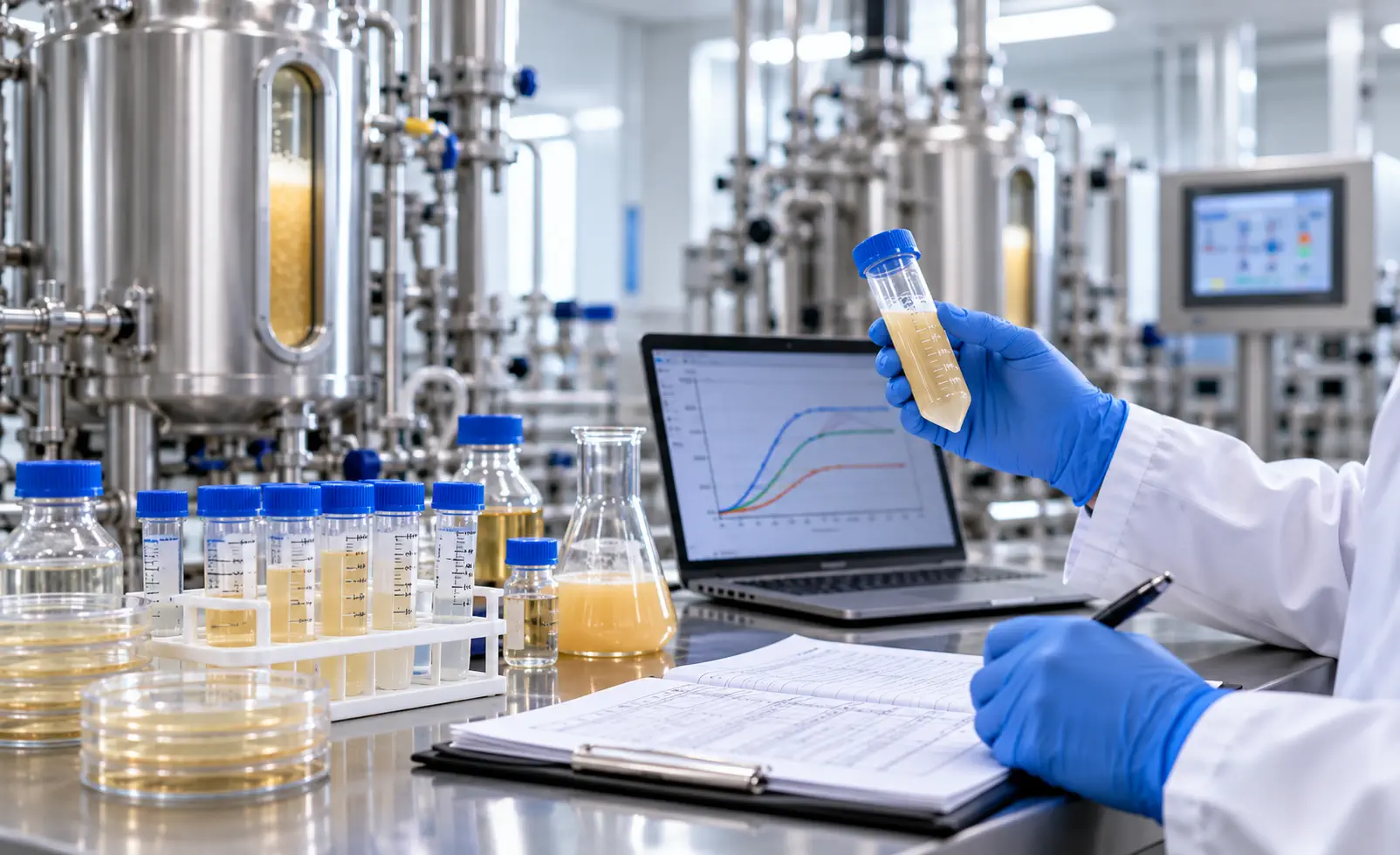
Figure 2. Illustrative laboratory evaluation of a changing fermentation sample. Broth behavior and process trends require actual measurements; this image contains no validated rheology data.
6. Shear risk should be assessed as a biological limit, not a slogan
Mechanical agitation produces regions of higher local energy dissipation. Gas bubbles, spargers, interfaces and pumping also contribute to stresses experienced by the culture. The biological result depends on organism morphology, cell-wall strength, aggregation, life stage and product pathway. A high-shear condition that works for a robust bacterium may be unacceptable for fragile cells or delicate mycelial structures.
However, “low shear” by itself is not a meaningful guarantee. Reducing agitation excessively can create nutrient gradients, oxygen deficiency or unstable suspension, which may also damage performance. For shear-sensitive processes, the engineering goal is to establish a validated working window that maintains adequate mixing and mass transfer while limiting biological stress. Ask what measurements or trial outcomes support the proposal; do not interpret impeller shape alone as evidence of suitability.
7. Four mixing measures that make RPM comparisons more useful
Shaft speed becomes more informative when paired with geometry and process testing. The following quantities are not direct substitutes for one another, and each needs a clear measurement or calculation basis. For instance, impeller tip speed can be estimated as pi times impeller diameter times rotational frequency in revolutions per second. That does not establish local shear exposure throughout the vessel.
Measure | What it tells the buyer | Important limitation |
|---|---|---|
Tip speed | Relative blade-periphery velocity at a given diameter and speed | Does not describe gas dispersion or overall mixing alone |
Power per liquid volume (P/V) | Mechanical energy input normalized to working volume | Changes with impeller type, gassing and broth behavior |
Mixing time | How quickly a tested tracer becomes acceptably distributed | Depends on the criterion, position and operating condition |
kLa / oxygen-transfer evidence | How effectively oxygen can enter the liquid under defined conditions | Sensitive to broth, gas flow, temperature and test method |
For highly oxygen-demanding cultures, oxygen transfer and gas handling may be decisive. For slow-moving or viscous broths, mixing time and circulation coverage can be more revealing. For shear-sensitive processes, tip speed or local dissipation may establish a limiting boundary. A responsible supplier comparison selects the metrics relevant to the culture, then compares them on an equivalent basis.
8. Why scale-up should not preserve RPM by default
When vessel dimensions change, the impeller diameter, number of circulation paths, hydrostatic conditions and gas distribution also change. Because rotating machinery and fluid dynamics do not scale linearly with vessel volume, copying 500 rpm from a bench vessel to a larger tank is not a reliable transfer strategy. Maintaining constant tip speed can change power per volume; maintaining power per volume can change tip speed and mixing time. There is no single universal scale-up rule.
A better approach is to define the primary biological and process constraints first. If oxygen demand dominates, test whether the larger system can meet it with the planned sparger and gas-control arrangement. If feed dispersion is critical, measure or bound mixing time. If morphology and shear are sensitive, protect the relevant mechanical or biological limit. The chosen compromise should be recorded so later engineers can understand why the operating point changed.
9. What OLLITAL equipment pages establish and what still requires confirmation
OLLITAL publishes agitation, temperature, pH and DO control capabilities for its laboratory glass and stainless-steel bioreactors. The current OLT-100-M1 glass bioreactor product table lists a stirring-speed range for its laboratory vessel options. The OLT-500-C1 stainless-steel fermenter page lists different agitation limits by vessel size. These are published equipment capability descriptions, not organism-specific recommended speeds and not measured oxygen-transfer guarantees.
For certain smaller OEM benchtop configurations, the site also lists a customizable blade as an option. That supports a discussion of impeller choice, but it does not mean every ordered vessel will include multiple impeller designs or that all blade geometries are available on every drive. Confirm current model drawings, shaft and seal arrangement, permitted blade combinations, materials, and operating restrictions in the project quotation before treating an option as supplied hardware.
See the current Laboratory Small Glass Bioreactor Fermenter and Stainless Steel Bioreactor Fermentor for the published product families.
For a listed blade customization example, review the OEM Benchtop Bioreactor page; configuration must be reconfirmed for the actual order.
10. A practical way to evaluate an impeller proposal before purchase
At the inquiry stage, send the organism or culture morphology, smallest and largest working volumes, viscosity range or relevant broth samples, solids content, gas demand, sparger concept, feed locations, planned DO strategy, sterilization approach and any evidence of shear sensitivity. Ask the equipment engineer to return a vessel-and-impeller sketch rather than only a speed range. That sketch should show impeller type, diameters, number, baffle arrangement if applicable, probe and feed positions, and the gas injection point.
During engineering review, separate mechanical feasibility from biological suitability. Mechanical review covers drive power and torque, shaft stability, seal arrangement, allowable speed and material compatibility. Process review covers gassed circulation, suspension, foam, oxygen demand, thermal behavior and feed dispersion. Testing or commissioning evidence should be tied to the actual working volume, fluid, gas flow and instrument method. Treat water tests as a useful baseline, not proof of performance in a highly viscous fermentation broth.
Before approving the system, make sure the quotation distinguishes the delivered hardware from selectable alternatives and later engineering work. Where a trial or process validation is needed, agree on the acceptance questions in advance. Example questions include whether the liquid remains homogeneous within the required time, whether oxygen supply is sufficient at peak demand, and whether the culture retains acceptable morphology and productivity.
The decision to make: design for the demanding part of the run
Good impeller selection is rarely about the fastest possible stirrer. It is about matching the mixing duty, gas-liquid transfer and biological stress limits across the entire batch, including the period when biomass and viscosity are highest. Radial and axial-flow designs offer different flow tendencies, but final selection depends on vessel geometry, gassing, broth behavior and the culture itself. The defensible configuration is the one supported by the application brief and relevant test evidence.
At OLLITAL, we recommend sharing a short process description and the anticipated worst-case broth conditions before confirming the agitation assembly. That gives our engineering team a practical basis for discussing a vessel drawing, drive range, impeller options and site-specific commissioning expectations.
Need to assess impeller geometry for a particular organism, viscosity or oxygen-transfer requirement? Contact OLLITAL with the working volume, culture type and your current mixing limitations.